Laudate Mariam Blog

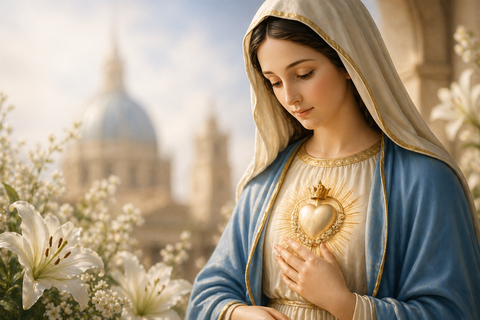
Many Catholics recognize the Divine Mercy image or have heard of the Chaplet, yet these beautiful devotions are often experienced as separate pieces rather than a unified gift. In reality, what Jesus revealed through St. Faustina is a single, deeply connected message centered on trust in His mercy.

In the early 20th century, the Polish nun St. Maria Faustina Kowalska received a series of revelations in which Jesus asked her to help spread this message to the whole world. These were not complicated theological instructions, but simple, profound invitations for souls to return to Him with trust.

At the heart of this devotion are four pillars. Each one expresses a different way of encountering Divine Mercy, yet all lead to the same place: a deeper trust in Jesus Christ, who is Mercy itself.

The Gospel of Luke gives us the foundation.

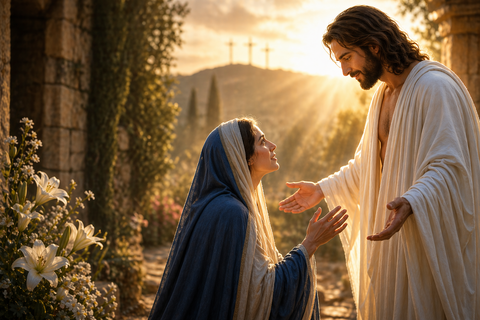
The angel Gabriel is sent to Mary, a virgin, and greets her with a mystery: “Hail, full of grace, the Lord is with you.” She is troubled, not with fear, but with wonder. The message unfolds simply—she is to bear a son, the Son of the Most High.

Mary asks how this can be, and the angel reveals the work of the Holy Spirit.

Then comes her response. “Behold the handmaid of the Lord; be it done to me according to your word.”

In that moment, the eternal enters time.

As Catholics, we sometimes hear the phrase “a happy death.” At first glance, the expression may sound unusual. Death, after all, is often surrounded by sorrow, uncertainty, and fear. Yet within the Christian tradition, the idea of a happy death carries a deeply hopeful meaning.

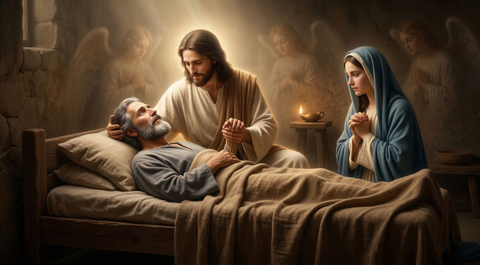
For centuries, the Church has lovingly entrusted this moment—the final passage from this life to the next—to the intercession of St. Joseph. Many Catholic prayers ask for his help at the hour of death. Generations of believers have turned to him with quiet confidence, believing that the foster father of Jesus accompanies the faithful in their final moments.

But where did this devotion come from? And why has Catholic tradition come to call St. Joseph the patron of a happy death?

“I want to become a saint.”

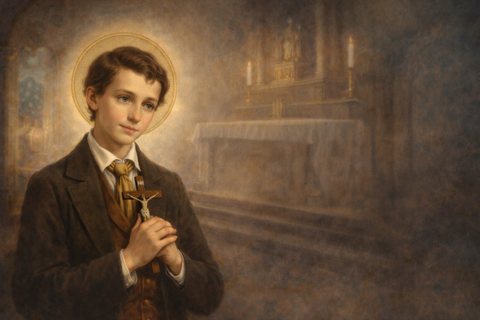
These simple words, spoken by a young Italian boy, carried a sincerity that surprised even the great educator who heard them. The boy was St. Dominic Savio, and unlike many childhood dreams that fade with time, his desire to become a saint shaped every part of his short life.

Before dawn in the mountain town of San Giovanni Rotondo, the world often seemed suspended in a quiet stillness. The narrow streets were dark, and the Capuchin friary stood silent against the pale outline of the hills. Inside its stone walls, the first hours of the day belonged to prayer. It was Lent, the season when the Church gently invites her children to slow their steps and walk again beside Christ on the road to Calvary.

In the recorded visions of Blessed Anne Catherine Emmerich, we are given a tender and profoundly Marian image: Our Lady herself revisiting the places of the Passion after the Resurrection, praying them in silence long before wooden stations were ever placed on church walls.

The Church permits belief in private revelations but does not require it. They do not add to the Gospel. Rather, when authentic and carefully discerned, they help the faithful meditate more deeply on what has already been revealed in Christ. The visions recorded by Blessed Anne Catherine Emmerich have long nourished Catholic devotion, especially during Lent.

The wind was biting, the river Gave was ice-cold, and for fourteen-year-old Bernadette Soubirous, the day began with a simple, desperate need: firewood to keep her family warm. She walked toward the shadow of the Massabielle grotto—a place the locals used for grazing animals and discarded trash. She had no idea that in this forgotten, silent corner of France, the veil between earth and heaven was about to be pulled back. What did a poor, uneducated girl see in that moment of stillness that would eventually draw millions of souls to the same spot?

Each year, on the third day of February, a quiet and striking ritual unfolds in Catholic churches throughout the world. The faithful approach the altar one by one. A priest raises two blessed candles, crossed gently against the throat, and speaks words that are at once ancient, tender, and bold in faith. This is the Blessing of Throats, given on the feast of St. Blaise, bishop and martyr, patron saint of those suffering from ailments of the throat and of all who depend upon the fragile gift of voice.