

A simple practice can help us carry the grace of Mass, the Rosary, and Adoration into the rest of our day: speaking to Jesus, Mary, and the saints in short, heartfelt prayers as we work, worry, give thanks, and go about ordinary life.
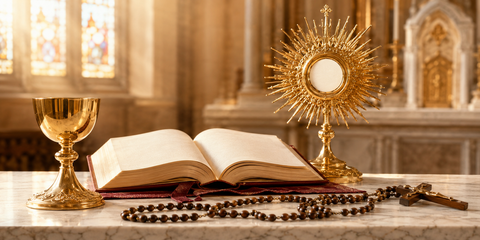
On November 2, 1946, a newly ordained Father Karol Wojtyła celebrated his first Mass in the Crypt of Saint Leonard beneath Wawel Cathedral in Kraków. More than fifty years later, as Saint John Paul II reflected on his Eucharistic life, he remembered how his eyes had returned daily to the consecrated Host and chalice.
That first Mass was not simply the beginning of his priestly duties. It marked the beginning of a lifelong return to Jesus—at the altar, in prayer with Mary, and before Christ in the Blessed Sacrament.
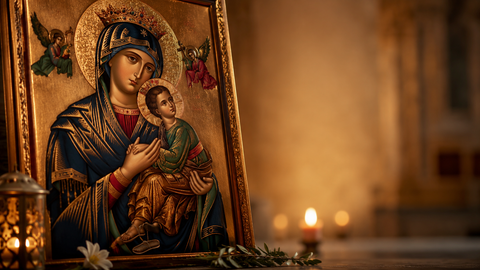
Many Catholics have seen the image of Our Mother of Perpetual Help countless times. It may be hanging in a parish church, placed on a family altar, tucked inside a prayer book, or printed on a small novena card. The image is so familiar that we may think we already know it by heart. But near the bottom of the icon is one small detail that many people miss: the Child Jesus’ sandal is slipping from His foot.
Once you notice it, you may never look at the icon the same way again. That loose sandal is not a random artistic detail. It tells a tender story about fear, trust, and a child running into the arms of his mother. It also helps us understand why Mary is called Our Mother of Perpetual Help.
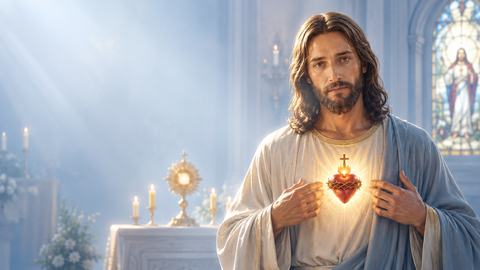
Many Catholics have heard of the Nine First Fridays devotion, but not everyone knows what it means, where it comes from, or why it is practiced for nine consecutive months. Some remember it from childhood, some have seen it mentioned in prayer books, and others have heard it connected to the Sacred Heart of Jesus and the promises given to St. Margaret Mary Alacoque. Still, the question remains: why nine? Is the number symbolic, is it a strict rule, or is it something deeper than a simple devotional count?
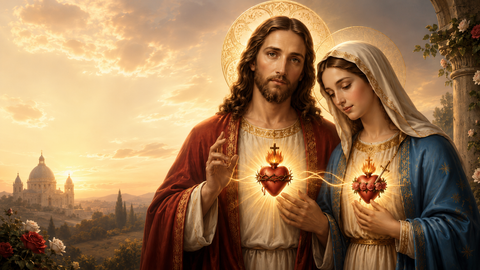
In many Catholic homes, especially here in the Philippines, it is common to see a holy image of the Sacred Heart of Jesus near an image of the Blessed Mother. Maybe there is a rosary hanging beside the family altar. Maybe there is a medal tucked inside a wallet, a small statue near the doorway, or a prayer card kept close during difficult days.
For some, this raises a simple question: Why do Catholics love both the Sacred Heart of Jesus and the Immaculate Heart of Mary?
The answer is beautiful and simple.
The Sacred Heart of Jesus and the Immaculate Heart of Mary are not competing devotions. Mary’s Heart does not lead us away from Jesus. Her maternal heart leads us more deeply into the love, mercy, and grace flowing from the Heart of Christ.
The Heart of Jesus is where mercy comes from. The Heart of Mary helps lead us there.
As we honor June as the Month of the Sacred Heart, this is a beautiful time to reflect on why the Church has long cherished the Sacred Heart of Jesus and the Immaculate Heart of Mary together in prayer, devotion, and love.
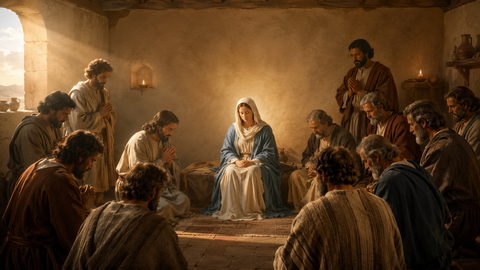
Before the fire fell, there was waiting. Before the sound of a mighty wind filled the house, there was silence, prayer, and expectation. The Apostles had seen the risen Lord and watched Him ascend into Heaven. Yet they still had to wait for the promise of the Father.
They were no longer standing beside the empty tomb in wonder. They were no longer simply rejoicing that Jesus had conquered death. Now they were gathered in the Upper Room, holding on to His promise. Something was coming, but they did not yet know how it would change them.